Nine complete .PDF graphic albums of the Atomic Robo comic series from Tesladyne LLC, plus the 2014 Atomic Robo RPG tabletop roleplaying game from Evil Hat Productions.
I mentioned in my last entry that I’m reading The Late Lord Byron. I only ever read from my phone/ereader during my commutes/lunch breaks (mostly because I do Not want to be juggling a physical book while on the go), and the Byron book is something I’m reading physically, so I needed another thing to read as well. So this morning, I ended up starting another nonfiction read—not history this time, but something that falls into what I consider the “nature/animals” category—in this case, about modern ecology, nature, and the environment.
…only a few pages in, that book mentioned Lord Byron. I just had to laugh; apparently, I can’t escape him!
(For further context: this is not the first, "Unexpectedly, Lord Byron!" moment I've had this year. I've been haunted by him since at least April. Even on my vacation a few weeks back, I kept running into him... and no, I did not go to England, lol.)
Pmuch all I did today is sew, it feels like. I did actually take breaks! But that's what it feels like. BUT!!! I did get the ENTIRE SECOND BACKING DONE, so totally worth it. :D :D :D
The last one, of course, is the big one, so I doubt I'll get it finished tomorrow, but I will try!!! >: Hopefully I'll get it half done at least..
I did also do some painting; the edges are more than halfway done now yay!!! It's all coming together.gif, hahahahaha
In other news, my father had his big oncology appointment today, and they're gonna yeet his prostate as a first step, and that's happening next Friday! So fast! Anyway obviously there's a lot of medical shit happening pretty quickly in the leadup to that - scans and appointments and etc., but the sooner the surgery is done the sooner he can recover from that, and they can see if/what else needs doing. Who knows, maybe they'll get all the cancer in one fell swoop and it'll just be physical recovery from, you know, And Suddenly An Hole And Organ Removal! Since it's his second go around though I think they're gonna be doing a LOT of follow up scans though, hahahahaha.
Title: Into Darkness Fandom: The Fantastic Journey Author: badly_knitted Characters: Willaway, Varian, Scott, Fred. Rating: PG Written For: Challenge 500: Amnesty 50, using Challenge 448: In The Dark. Setting: After the series. Summary: Just because it’s daylight in one zone doesn’t mean it will be in the next. Disclaimer: I don’t own The Fantastic Journey, or the characters. They belong to their creators. A/N: Quadruple drabble.
Kinda like the new cardiologist. Even if he does want to put me on statins...don't waaaaaana. Though he's going to hold off until I see my GP (who happens to be upstairs from his office) in June since she'll order the regular blood tests to see how things are going. These will be the first tests after starting Mounjaro so fingers crossed.
My BP was normal in both arms which stunned me since I was kind of a nervous wreck. We did and ECG and looks like he's going to have me do more tests - a transthoracic echocardiogram and a nuclear stress test at the end of the month. The latter will likely be without exercise since I have my wobbly-ass knees.
The reasoning is the ECG did show left ventricular hypertrophy. I couldn't remember when I had a previous one which DUH, it was before the surgery. I found that and it showed that it was just borderline whereas it's more obvious in the one today. Greeeeeat.
I don't have any particularly obvious symptoms that I know of aside from the fact that I know my sleep sucks. So I'm going to have to get that stupid sleep study done after all. If I can do the play at home version, to assure that I'll get enough sleep for an actual diagnosis, I'll hit Ye Olde Recliner. Otherwise my achy shoulders and back will wake me up like usual and throw things off. I will have to say that I've noticed a small improvement in less needed trips to the bathroom through the night. A win is a win.
Dinner last night was ok. Not great, but not horrible. My daughter and son in law are very big on eating meat, while I am not so keen. My son in law loves steak and hamburgers, and his daughters also seem to like hamburgers although they're not so interested in steak. (But will eat it when it's served.) The hamburger place we went to for dinner had a few things on the menu that weren't steak, including fish and chips, macaroni cheese, and something they called shepherd's pie. I ordered the shepherd's pie, and I don't think they really understood what shepherd's pie should be like. It was very tasty, if slightly too salty, but there was only a minuscule amount of meat in it, and way too much corn. (In my opinion, any corn in a shepherd's pie is too much corn.) I realise I've just said I'm not a bit meat eater, but the premise of a shepherd's pie is that there is a layer of minced/ground meat topped with a layer of mashed potato, and this pie didn't really have a layer of meat, more just a few scattered pieces of meat here and there under the potato. The mashed potato topping was fine except for being far too wet; it didn't really hold its shape or act like a pie topping should.
Also on the menu was what sounded like a delectable chocolate cake covered in chocolate ganache and with a vanilla filling. I was too full to eat it then and there (and nobody else was having dessert) so I ordered one to take away and have just now eaten it as part of lunch. It was very good but also very very filling and I don't feel like I will need much dinner tonight.
I have no idea why, but I woke up this morning around 1:30 am (after only about 4 hours sleep) and couldn't get back to sleep. I lay in bed reading for a while and eventually got up and started my day an hour or so earlier than usual, deciding that I would do the almost unheard of thing for me, that is, take a nap later in the day. So before lunch I lay down to try to sleep and I think I did manage to drift off for 15 or 20 minutes. I definitely hope to have a better night tonight.
This morning I solved the mystery of the unidentified buzzing/beeping object in my room. It turned out to be the old phone my daughter gave me for receiving log in codes for her work bank account. It's not on any phone plan but can receive codes as long as it's connected to the wifi. I keep it in the top drawer of the chest of drawers next to my bed, and when it was buzzing last week it was hidden behind a pile of clothes in the drawer but this morning it was visible so I could see its screen lit up when the buzzing started and was obviously coming from that drawer. I can't log in to the phone (I don't need to because when the bank sends a code it's visible on the screen even when the phone isn't open), but my daughter was able to sign in to the phone and discover that someone from a UK phone company had been trying to call her about some promotion they were offering. She has turned off the vibrate function and changed some other settings, so we hope we don't get more mysterious sounds from the phone. Obviously I don't really care if it makes noises during my waking hours, but I don't want to be woken up at 3 or 4 am by someone calling from the UK five hours ahead.
Inspired by nothing in particular: one of the UFOs (Un-Finished Objects) in my craft stash is these Rebel Alliance Wrist Warmers. I'm maybe a third through the first one and it already looks lovely, but since it's my first ever colorwork it's taking forever. I do most of my knitting as a fidget, either during work meetings or when visiting family, so projects where I have to focus a lot aren't a great fit. Still, I like them. Maybe I'll get them done by winter.
In this video, Hana from Korea shares a "Survival Manual" from South Korea to the U.S. From the "Silver Siege" tactics to the "Philosophy of Joy (Heung)," here is how ordinary citizens defeated the army and the elite cartel. Don't trust the system. Don't wait for heroes. Trust your neighbor and yourself.
Apologies for length, but this is an important monograph about an important Doctor Who story.
I first watched the original version of The Daleks back in 2007, from the DVD set of the first three Who stories. I wrote then:
Great fun. I had of course read David Whitaker’s novelisation, roughtly 25 years ago. A few things that sprang to mind:
1) the settings were very convincing – the Dalek city (OK, we know with the eye of hindsight that it was a model shot), the sense that this was a big landscape with forest, swamp and caves.
2) Barbara’s romance with Ganatus – there is surely some fanfic dealing with that somewhere?
3) The devious Doctor, sabotaging the TARDIS deliberately to get a chance to explore the city.
4) The time travellers, despite Barbara’s relations with Ganatus, are all set to just bugger off and leave the Thals to their doom at the end of episode 4.
5) The end of episode 6 is indeed a literal cliff-hanger – with a brutal resolution
6) Terry Nation’s attack on pacifism. A lot more ideological than I remembered from the book.
7) The Daleks at the end talking about the total extermination of the Thals practically raise their plungers in Nazi salutes – sounds silly when I describe it but actually very effective.
8) the one bit that really didn’t work – the fight at the end; the time-travellers and Thals win too easily.
Anyhow, well worth it. I watched with the closed caption commentary, which to be honest was more annoying than helpful on the whole. Though it was interesting that the very day of the filming of the Doctor’s first encounter with the Daleks was 22 November 1963, the day before the first Doctor Who (recorded over a month before) was to be broadcast, and also the day of John F Kennedy’s assassination. (And of the deaths of C.S. Lewis and Aldous Huxley; but who remembers that?)
When I came back to it in 2009 early in my Great Rewatch, I wrote:
The Daleks really is where Doctor Who gets going. There is a case to be made that the pepperpots never get so interesting again. Certainly they are incomprehensible, blankly hostile, psychopathically destructive, and strangely watchable. The conversion of the Thals from pacifists to fighters has some moral ambiguity – the Tardis crew are motivated by their own need to get away, and there is a certain air of tragedy even in the final victory. (Shame that the actual final fight scene is a bit crap.) And Barbara gets the first Who romance with Ganatus (comprehensively rewritten to Barbara/Ian by David Whitaker for the book).
Coming back to it again, I felt that it holds up really well, especially if you are sensitive to the cramped sets and other constraints of the production. The four main cast are very good, clearly getting into their stride. And I should have previously mentioned the superb incidental music of Tristram Cary. You can get it in this box set.
The colorised and abbreviated version of the story released a few years back (you can get it here) foolishly dumps Cary’s music, misses some of the plot and loses out a bit on pacing, but ends with this lovely montage of the rest of the Hartnell era.
I know the novelisation well, and re-read it for this post. The second paragraph of its third chapter is:
I ran towards the sound, the branches of trees cracking and powdering in clouds around me as I forced my way through. I found Barbara with her back pressed up against a tree, the knuckles of one hand pushed hard against her teeth. She was staring away from me into some bushes. I caught the glint of the eyes of some animal or other and stopped dead still.
There was a time when this was literally the only Doctor Who book in existence (under its excellent original 1964 title of Doctor Who in an Exciting Adventure with the Daleks); indeed it was the only commercially available representation of any Doctor Who story, in those days long before video-recorders (let alone DVDs). So we have Whitaker taking much greater liberty with Terry Nation’s TV script than almost any other novelisation (John Lucarotti’s treatment of The Massacre differs even more from the story as broadcast, but he was reverting back to his own original script).
And the result is quite possibly the best of the novelisations, judged as a novel. The opening of the story is comprehensively rewritten, Ian being an unemployed research scientist who accidentally encounters Barbara, who has been tutoring the mysterious Susan, and gets involved with the Doctor and his Tardis. So much time is invested – wisely – in setting the scene that we are a third of the way through the book before we reach the equivalent point to the end of the TV story’s first episode (out of seven).
The biggest novelty, for those of us who have read almost any of the subsequent hundreds of Who books, is that the whole story is told in the first person, from Ian’s point of view. (It’s not unknown in later Who literature, but it is very unusual.) This does require a certain amount of narrative juggling, but Whitaker gets away with it better than I remembered from when I first read this, three decades ago.
Today’s generation of fans will squee at the pronounced sexual tension in the Ian/Barbara relationship here – the TV story has Barbara close to flirting with Ganatus, one of the Thals, but he barely gets to look at her on the printed page. Poor Susan rather fades into the background as well after she has done her mercy run to the forest. The characterisation of the Doctor is much more harsh and edgy than Hartnell’s depiction; since Whitaker was the story editor, perhaps this was what he had originally in mind? (A possibility supported by the surviving first cut of the first ever episode.)
And the Daleks themselves are pretty memorable here, though Whitaker seems a bit confused about their size – three feet high at one point, four foot six at another, though the illustrations are of our “normal” sized pepperpots. However, this confusion is compensated for by the glorious description of the mutants within the metal casings, and their glass-enclosed leader. The TV show has never managed such memorable presentations of the creatures inside, though it has occasionally tried. (The versions encountered by the Ninth Doctor come closest.)
Anyway, this is an excellent read, well worth hunting down.
In for a penny, in for a pound, I thought, so I went and also rewatched the Peter Cushing film Dr Who and the Daleks. Last time I saw it, in 2010, I wrote:
As a Doctor Who fan, it is impossible not to judge this film in comparison with the original seven-part Dalek story, so I won’t really try. The positives: it is in colour, which is a huge difference. It looks better (except, oddly enough, the interior of Dr. Who’s Tardis, which just looks like a film set with some machines dotted around it). The plot is tighter – it’s difficult (with one exception, which I’ll get to) to remember what has been cut from the original story to produce a film half its length, and some of the best bits are still there. The music is decent – not as unearthly as in the TV version, but not offensive either.
The huge difference, however, is in the performances and portrayals. Peter Cushing plays elderly slightly comical scientist Dr. Who, who keeps a time machine called ‘Tardis’ in his back garden, shaped like a police box for some reason. He doesn’t have the grumpy gravitas of William Hartnell, but I detect some homage to his portrayal in the approach taken by Sylvester McCoy. Roberta Tovey as his nine-year-old granddaughter Susie is actually rather good, and recasts Carole Anne Ford with perhaps a bit more grit.
When I first saw this on a Saturday morning repeat aged about 11, the surprise was that Ian is played by Roy Castle, who of course I knew as the presenter of the BBC children’s programme Record Breakers. This was actually his second film role – he had also appeared with Peter Cushing in another Max Subotsky film with a doctor in the title (Dr. Terror’s House of Horrors) earlier in 1965. Castle’s Ian starts as a clown but more or less settles into the heroic sidekick to Cushing’s Who by the end, probably the closest of the four main characters to the TV version (though William Russell’s Ian is much brainier).
The most serious cut in the film as compared to the TV original is Barbara, Dr. Who’s other grand-daughter, played by Jennie Linden. She gets almost nothing to do, except that her over-vigorous embrace of Ian sets Tardis going in the first place. (And even that is portrayed as Ian’s clumsiness.) She is practically background scenery, especially when compared to Jacqueline Hill’s history teacher.
Rewatching it in close proximity to the original TV story brought home to me how much better the latter is. Just compare the almost wordless acting of Hartnell and Russell here:
versus Cushing, Castle and Tovey playing the same scene for weak laughs here:
Obverse Books have published a novelisation of the film, ostensibly by “Alan Smithee” but I believe actually by Iain McLaughlin. The second paragraph of its third chapter is:
Ian considered himself to be fit and healthy. He had been drilled into good shape during his National Service and he was still active now, playing football twice a week and turning out for the local cricket side during the summer. He also went dancing – hopefully from now on with Barbara – every weekend, but even he was feeling the effects of the journey. He was out of breath and perspiring heavily. His shirt was soaked with sweat and his muscles ached.
It made me realise that the visual comedy of the film is one of its key elements, very difficult to transfer to the printed page! Anyway, you can get it here.
So, on to the latest of the Black Archives, Oliver Wake’s monograph on The Daleks, concentrating on the original TV series but also referring to the Whitaker novelisation and the Cushing film, and to later Dalek and Terry Nation stories. There is a real break of format with previous Black Archives, with no less than eighteen short chapters each addressing a different aspect of the story, and building the overall case (which is surely unassailable anyway) that The Daleks can be seen as the crucial founding text of the show as a whole. A short introduction explains the book’s agenda:
I aim, firstly, to explore the influences and inspirations Nation called upon in devising the story; secondly, to analyse the story’s mixed authorship and the ways in which varied contributors gave it meaning; and thirdly, to examine The Daleks’ world-building as a piece of televisual fantasy fiction.
The first chapter, “Commissioning The Daleks”, recapitulates what we know about how the story came into being – it was written very quickly, which meant that it was ready for production when an early gap needed to be filled.
The second chapter, “The Bomb”, looks at how the story portrays radiation sickness and the neutron bomb.
The third chapter, “A Climate of Fear”, looks at other portrayals of the aftermath of nuclear war in fiction up to the mid-1960s. Its second paragraph is:
Stories of nuclear weapons had been science fiction and consequently were hidden away in niche publications. After the Second World War they began to emerge into the mainstream, in Britain at least; in the more conservative USA they tended to remain hived off in the sci-fi niche¹. Every conceivable scenario of nuclear devastation was played out in literature, much of it ill-informed and scientifically illiterate. ¹ Brians, Paul, Nuclear Holocausts: Atomic War in Fiction, unpaginated online edition, Chapter 1.
The fourth chapter, “The Survivors”, queries the extent to which the story is meant to show the future of Planet Earth humanity.
The fifth chapter, “The Dead Planet”, looks at the Petrified Jungle and also in some detail at the Magnadon (the dead metallic lizard).
The sixth chapter, “Alien Sound”, looks at the brilliant soundscape of the story created by Tristram Cary’s music and Brian Hodgson’s effects. As I noted earlier, this is one point where the Cushing film is seriously deficient.
The seventh chapter, “The Time Machine”, looks at the influence of Wells’ novel and George Pal’s film adaptation on The Daleks.
The eighth chapter, “The Mutants”, looks at what we are told about both Thals and Daleks as mutations, and points out the inconsistencies. (I must say I prefer this approach to desperately trying to retcon everything.)
The ninth chapter, “The Aryan Thals”, points out the problematic of the perfect Thal race being tall and blond, leaning again on The Time Machine.
The tenth chapter, “Pacifism, the Thals and Terry Nation”, goes into Nation’s well-documented political views, which he expressed as pacifist and sometimes socialist. (So Gareth Roberts is completely wrong on this, not surprisingly.) Ian’s argument with the Thals is Nation’s argument with himself.
The eleventh chapter, “Gender and Authority”, looks at the story’s problematic treatment of gender roles among the Thals and the character of Dyoni, and queries how both Thal and Dalek societies are actually governed.
The twelfth chapter, “Martians and Ants”, looks at the influence of The War of the Worlds (both the Wells novel and the 1953 film) and the early John Wyndham story “Wanderers of Time” on The Daleks.
The thirteenth chapter, “The Power (and Irradiation) of the Daleks”, looks at the Daleks’ dependence on static electricity, their life support systems, and their vulnerability to radiation, and then asks, what do they eat?
The fourteenth chapter, “Outer Space Robot People”, makes some interesting points about who the Daleks are shown to be, as opposed to later portrayals.
In their first appearance, the Daleks are scared isolationists. They are survivalists trapped in their fallout shelter, unable to go outside but possessive of the world beyond their city. This jealousy manifests as paranoia and xenophobia when the Doctor’s party and then the Thals come calling.
The sixteenth chapter, “The Direction of the Daleks”, calls attention to the work of Christopher Barry and Richard Martin in bringing the story (and the Daleks) alive.
The seventeenth chapter, “Extermination, Then?” looks at how the Daleks’ catchphrase slipped subtly into the script.
The eighteenth chapter, “Dal to Lek”, looks at the sources for the name Dalek. These include Wyndham’s “Wanderers of Time” and Nation’s general fondness for cycling through similar names. Wake considers and discounts the relevance of the fact that “dalek”/“daleko” means “far away” in the languages once known collectively as Serbo-Croat.
If I may divert for a moment, I am not quite so sure. My relationship with Balkan nationalisms is ambivalent, but there is a haunting Serbian First World War song, “Tamo daleko”, about the exiled remnants of the Serbian army sheltering on Corfu. (As a Serbian military friend once said to me, it’s not so much like Dire Straits’ “So Far Away From Me”, which would be a literal translation of the title, as “It’s a Long Way to Tipperary”, only less jolly.) I do not know if Nation was ever exposed to, say, a Serbian restaurant playing live or recorded folk music, or some other aspect of Serbian culture, but I can imagine him hearing this song somewhere, somehow, and “daleko” sticking in his subconscious memory. It is the heavily emphasised second word of each of the first three verses; even if you don’t speak any Serbian, it is difficult to miss.
A brief conclusion pulls all this together and looks at questions of authorship.
An even briefer note looks at one of the story’s many variant titles, “Beyond the Sun”, and how this might have come to be.
I was a bit worried at first that I wasn’t going to like this Black Archive; Wake’s style starts out a little jerky. But he settles down fairly quickly and delivers a must-read analysis of one of the most important Doctor Who stories. You can get it here.
Got almost everything planted today: Eggplant, Oca, Ulluco, Lemon Verbena, Flowering Tobacco, Sweet Annie, Holy Basil, Dahlia and a couple cultivars of Morning Glory. Hopefully, I'll get the rest in this week. I still have one order that hasn't come in; my replacement Yacon. The wrong plant my last order(from another vendor), the Longevity Spinach is doing well. The Canterbury Bells are covered with buds and the Autumn Sage is COVERED with blossoms and bees. Enjoying the cool Spring weather, since usually it's about a week or two between Winter and Summer;>! Cheers, Pat
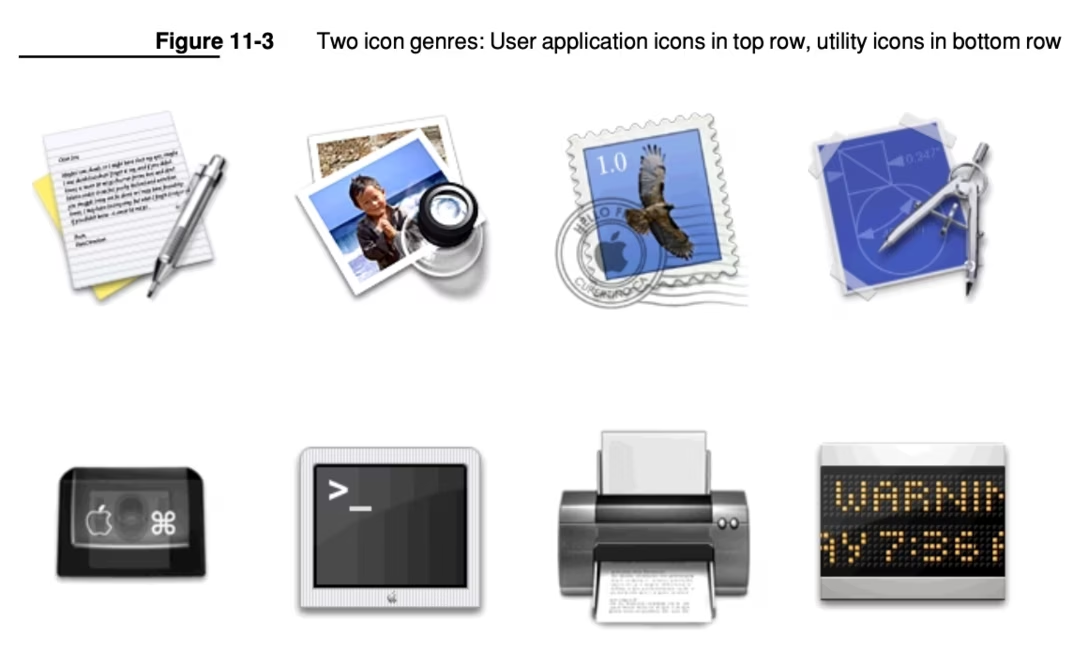
Since the early 2000s, Mac OS X had a few orientations of icons depending on whether they were applications, files, utilities and so on:
In 2020, macOS Big Sur unified those styles and made them more iOS-like:
A few years later, Jim Nielsen revisited the icon “Big Sur-ification”, and showed examples of apps that did the transition really well, but also those where the transition felt… lazy, essentially shoving their previous icon into a roundrect.
For those, Nielsen proposes some alternatives that are delightful to see:
The Word/Excel/PowerPoint/Outlook explorations are particularly nicely done.
I haven't had much to share in terms of WIP snippets of late because I am in the outlining phase of the next Big Thing—also known as the phase where I New Game Plus a whole expac to refresh my memory of canon, wish I had started it sooner, wish I had done the same for Heavensward instead of relying so heavily on cutscene rewatches and transcripts, question my entire concept for the next Big Thing, let the Thing balloon dramatically beyond scope before I've even reached the quarter-point of the outline, question my entire life, realize I'm trying to conceptualize as one fic what should probably be at least two and that's actually where a lot of my problems were coming from, and prepare to ruthlessly pare the original project back into scope at any cost, knowing I can just write about the other stuff in other places.
Anyway, come along with me while I think out loud and figure out some stuff. (Or don't. This is probably a lot less interesting to anyone who isn't me.) Often when I am wrestling with a Writing Problem I will just open a new document in Scrivener and talk to myself in it until I figure it out. Today, among other things, we are taking a brief respite from Stormblood outlining to sort out some things post-Endwalker. As such, this is spoilery up to present canon.
This is the fanworks round-up post for April! Please link in the comments toany Guardian (or related fandoms) fanworks you created or enjoyed last month.
all kinds of fanworks are welcome – fic, art, vids, picspams, etc. - including those made for exchanges and events
new chapters of WIPs count
meta or discussion posts, too
whether or not you've already linked these in a post of their own, we still want them here!
If you're linking to fanworks you didn't create yourself, please clearly mark these "REC", so there's no confusion about authorship/creatorship.
(And please still do link your fanworks, meta, etc. separately, in their own post, at any time!)
So ... what Guardian and related fandoms works did you create or enjoy in April?
![[personal profile]](https://www.dreamwidth.org/img/silk/identity/user.png) james_davis_nicoll
james_davis_nicoll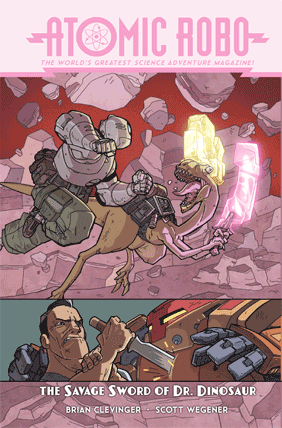


![[community profile]](https://www.dreamwidth.org/img/silk/identity/community.png)


![[syndicated profile]](https://www.dreamwidth.org/img/silk/identity/feed.png)