skygiants: Mae West (model lady)
While I'm talking about movies, I should also mention that I followed up my recent Kage Baker binge by finally reading her Ancient Rockets, a collection of her Tor.com blog posts about early silent science fiction and fantasy films.

I love it every time Kage Baker tangents her characters off into a discussion of old film in the Company books, so I expected this to be a good time and also provide me with a list of silent films that I would like very much to seek out, and it delivered on both these fronts. The funniest section was probably her tour through Frank Baum's apparently-largely-incomprehensible early silent Oz films (pantomime animals galore!). I don't particularly feel the need to watch them but I'm so glad to know they exist. I do however very much feel the need to watch The Man from Beyond, in which Harry Houdini plays a sailor who gets frozen in ice for 100 years; Aelita: Queen of Mars, in which a Soviet engineer leads a lunar worker's revolution after the titular queen of Mars falls in love with him; and Der müde Tod, in which a woman's husband is abducted by Death and she has to attempt to derail three other tragic romances across time and space if she's going to rescue him.

Kage Baker is a very entertaining writer who clearly loved these films and loved having the opportunity to talk about them, and, as is often the case, it's a pleasure to follow along with her genuine enthusiasm. (Poor [personal profile] genarti was very patient about my tendency over the course of the two days I was reading this book to burst into sudden laughter and then pass her my e-reader to force her to look at a paragraph.) Occasionally her style does veer into a moderately condescending Listen Up Youths territory, with some light Orientalism apologia; on the one hand Kage Baker wrote most of these essays as a distraction while dying of cancer so I don't really feel like I can hold it against her when she's being condescending, and on the other hand I do think she probably was also just like that. Odds are good that she would have been profoundly insufferable on Twitter if she'd ever made it on there. I am profoundly sorry, as always, that she never got the chance.
skygiants: Koizumi Kyoko from Twentieth Century Boys making her signature SHOCKED AND HORRIFIED face (wtf is this)
Among the other activities that kept me busy in late May/early June, I was also engaged in zooming through a massive reread of the last four of Kage Baker's Company books so that I could complete them in time to make an angry powerpoint for my friend's Zoom birthday party.

I maintain that this was a great and important use of my time! Unfortunately this has also had the predictable consequence that now all I want to do is grab people by the collar and rant about the Company books. I have now done this so much that I have already ended up giving the full powerpoint a second time on a completely unrelated Zoom call, and now I am going to once again deliver my rant to all of you!

It's all spoilers from here )

-- okay. Okay. I could go on but I have got to stop. This has been: the Company books! Thank you for going with me on this journey; I wish I could say that it's exorcised them from my brain, but, unfortunately, I am now all the way back on my bullshit and Despite Everything may be asking for Company fic for Yuletide.
skygiants: Na Yeo Kyeung from Capital Scandal punching Sun Woo Wan in the FACE (kdrama punch)
In starting out to write about the third of Kage Baker's Company books, Mendoza in Hollywood, I was surprised to find out that it -- and indeed every other Company novel -- have incredibly in-depth Wikipedia pages, through which I stumbled over Charles de Lint's review in which he explains that the first part of the book is interesting but slow/desultory and the last third is engrossing. This is fun for me because now I get to fight Charles de Lint! I love the first two thirds of Mendoza in Hollywood with all my heart and then the actual plot starts to happen and I become incandescent with rage because my Enemy has arrived.

Like, de Lint is absolutely correct that the first two-thirds of the book have no plot per se. What happens is that depressed cyborg botanist Mendoza arrives at her new posting, which is to collect rare plants in California's Cahuenga Pass in 1862, on the verge of the Great Draught of 1862-65 which is about to kill off cattle-ranching culture in the area and drive a number of species to extinction. While she's there she has a lot of feelings about California biomes and the corrosive impacts of humanity and time on natural ecosystems, and makes a lot of satirical observations about 19th-century society, and also gets to know her colleagues, a funny and interesting collection of cyborgs who all have their own entertaining quirks and hyperfixations and whom, it gradually becomes clear, are all also living through their own personal devastating hellscape of immortality under late-stage capitalism.

It is, for the record, an incredibly self-indulent book. There is one whole chapter that is simply Mendoza describing the experience of watching a silent film with her colleagues and explaining the plot of the movie in great detail and the precise ways in which everyone enthusiastically heckles it, a whole chapter, and it still works for me because of the way the comedy builds to an anti-catharsis and suddenly reveals a profound and destabilizing grief behind it. Each cyborg's individual narrative -- Porfirio and his family, Imarte and the city she lost thousands of years ago, Juan Bautista and his beloved condor Erich von Stroheim -- acts as its own unique reflection of Mendoza's own tragedy, and the thing I love about this in particular is not just that all these stories are so well-drawn but that birds, city, family, all, are clearly just as important in the grand scheme of thing as Mendoza's Big Sweeping Bad Romance. There are so many ways to love and unfortunately all of them leave you open to despair!

At this point in the book, what I always want is for Mendoza, after having taken two hundred pages to learn about her colleagues and really understand both the uniqueness and the universality of her tragedy, to make a profound connection to at least one of them -- ideally Juan Bautista, her closest narrative reflection! -- and take a step forward towards resistance against the Company overall.

Instead, at this point in the book, what I get is the appearance of Edward Alton Bell-Fairfax, my Enemy, the Worst Victorian Adventurer and spoilers follow! )
skygiants: blushing bubs from 'space sweepers' (unni bubs)
Sky Coyote, the second book in the Company series, is not anywhere near as good a book as In the Garden of Iden on its own, and for this reason I blithely thought I would be completely immune to caring very much about it.

Unfortunately! it turns out! that isn't how this works!

The narrator of Sky Coyote is Joseph -- Mendoza's bad dad, a slimy little fast-talking used car salesman of an immortal who's been doing varyingly sketchy deals on Company orders since the prehistoric era. In this book, the year is 1700 and his job is to play the role of Sky Coyote and convince a tribe of California Chumash to get on an airship and let the Company whisk them away to a secure base so that their culture, geneprint, etc. can be studied and preserved for wealthy hippy clients in the future who have convinced themselves that they were Chumash in their past lives.

Obviously this premise is. Hmm. Well. You know. Like, the book is in large part a satire on capitalism and appropriation, as exemplified by the Company and the wealthy future clients who are paying big money for Traditional Chumash Folkways. The Chumash themselves (who most likely originated the use of currency for economic trade in the Americas) come in for more than their share of affectionate satire, but most of the jokes revolve around the idea that businessmen and labor exploitation are the same everywhere ... what I'm saying is, you look at the premise, and you look at the book, and you grimace to yourself, and you think 'well, that could have been much worse?' But the premise is still what it is, which is 'protagonist poses as major indigenous religious figure, for Successful Schemes,' and there simply is no getting around that.

('Worse,' actually, is the judgmental servant Mayans in the beginning who are serving the immortals in their big fancy immortal base camp -- the jokes are very, hmm, Terry Pratchett thinking he's being funny about slaves who think they're better than you, and it's just not a good joke! But fortunately it doesn't last very long.)

Anyway. That's the A plot of the book, technically, but the actual emotional stakes of the book are all in the quietly understated B plot, which is: Joseph works with his Mendoza again for the first time since Things Went South in Garden of Iden, and does his best for her, which is not very good! this, unfortunately, devastates me!

"I was hoping you'd forgive me eventually," I said.

She brought her gaze back to me with a snap. "I didn't say I'd forgiven you," she said. [...] "No lies, no denials? Well, good for you. Listen, don’t feel too badly about this. I can’t forgive you, but I do understand you had no choice. You’re a Company man, and you had to do what the Company wanted. You always have; you always will. I don’t hate you for it.” She reached out and patted my paw absently. “There’s not enough of
you inside there to hate, is there?”

When this conversation happens, we've been in Joseph's head for almost a whole book; we know exactly how much of him there is in there, shoved under thousands of years of guilt and fear and bad jokes and self-justification, after the first time he found himself standing awkwardly in the middle between the Company and the righteous contempt of somebody he loved. And this particular book doesn't even really move him along in a character arc! Pretty much all it does is force him to acknowledge that there's a character arc along which he has deliberately not been moving! But I'm deeply attached to this horrible little remnant of personhood scraped over a thousand-year-old void who is coming to the glacially slow realization that there are parts of him he might not be willing to sacrifice, and seeing the shape of that arc illuminated is still enough to give me big feelings, it turns out.
skygiants: Utena huddled up in the elevator next to a white dress; text 'they made you a dress of fire' (pretty pretty prince(ss))
Last week I reread Kage Baker's In the Garden of Iden, the first book in her Company series which contains simultaneously some of the highest highs (this book, among others) and lowest lows (unfortunately, the vast majority of the thrilling series finale) that I personally have ever encountered in fiction.

This is of course a biased perspective, because In The Garden of Iden has been incredibly close to my heart since the first time I read it at the extremely formative age of thirteen, and I was fully prepared to re-encounter it with my heart hardened by later experiences and discover it was not all that. Unfortunately! this was not the case! My heart is not hardened and I still love this book with every piece of it!

In the Garden of Iden is the tragedy of Mendoza, an early modern teenage cyborg botanist who was taken from the dungeons of the Inquisition as a child by the Company around which the series centers.

The Company is a dystopian (so, deeply realistic, lol) megacorporation that has invented both time travel and immortality, and, predictably, uses this technology to seed history with unpaid immortal cyborg operatives who are sold a grand mission of 'preserving culture' for a vague but glorious future but obviously of course in fact are working towards the grand mission of increasing the Company's profits. All the cyborgs have access to a broad sense of future chronology up through a certain date (and, as a perk, all its greatest film, literature, and trashy TV), but are still stuck living through history in real time and don't actually know many of the details and certainly not anything related to their own futures -- a brilliant choice, IMO! The contrast between the casual-ironic inner voice of someone raised on twentieth century pop culture and the lived experience and concerns of someone fully embedded in the past, Very Much Another Country, allows Kage Baker to make some very good jokes and also really just slide the knife in when she wants to, because, as aforementioned, this book is a tragedy.

Anyway, it's the reign of Mary Tudor and Mendoza is on her first assignment in a small British country estate that happens to have a garden which contains a rare species of shrub, which is deeply thrilling to Mendoza the botanist and to nobody else in the team of immortals who have accompanied her on this journey for facilitation and cover.

Unfortunately, Mendoza then meets dreamy mortal Nicholas Harpole -- a Protestant polyglot proto-martyr with a slant towards Utopian heresy and deep suspicions about Mendoza's fake-Catholic fake-Spanish fake-family -- and falls head over heels in love with him over multilingual theological debates in a garden, as teenagers are wont to do. Nicholas wants to save Mendoza's soul! Mendoza, a cyborg atheist who is also nineteen, is pretty sure that this is impossible but finds it so romantic that he wants to try! This is not at all a recipe for disaster!

And, on the other end, there's Joseph, Mendoza's fake father twice over. Joseph is the perfect Company man, a cyborg who has recruited hundreds of kids over his thousands of years of operation; it's just chance that he happened to get assigned to play Mendoza's father not ten years after pulling her out of the Inquisition, but it is going to ruin his immortal life, it turns out. Joseph would be absolutely disgusted if anyone described him as trying to save Mendoza's soul, but he is trying to save her future, the only future he thinks she can have: a perfect Company operative, like him, because they're immortal, and the Company owns them, and you have to find satisfaction in your labor, because what else is there? As I have said before, I love morally ambiguous mentors very much, and I have a tremendous amount of feelings about Joseph's unrequited paternal feelings. Rough out there for a bad cyborg dad who's trying his best, which is very bad!

There are a few other elements in play to make the tragedy wheels turn -- Nefer, cyborg livestock expert and Mendoza's immortal fake duenna, who's got a few bad decisions of her own; Sir Walter, Nicholas' boss and the owner of the garden, a perfectly nice Tudor gentleman who's taking to Joseph's health potions a little too well; the rising tensions all throughout the country as the Counter-Revolution takes place -- but the crux of it is Mendoza, learning to her great distress that for all her augmented immortality she is not immune from being human, and it sucks.

When I embarked on this reread project, I was fully prepared to soldier on through the rest of the Company series, savoring the highs until the time came to descend, inevitably, to the increasing disappointment of the lows. Now, I'm honestly not sure, because the thing is I enjoyed this reread so much, and In the Garden of Iden is such a perfect standalone tragedy in and of itself, and the last couple books in the series have such a horrible retroactive warping effect on everything that makes the book work. So maybe I could just ... stop here? This is, technically, a thing that is possible for me.

On the other hand, then I would miss the whole rest of Joseph's journey, which is perfect to me, and I really love a lot of the characters that only show up in later books, and also I promised [personal profile] rachelmanija a really wild book review at some point in the near future and there's not MUCH that's wilder than the last book in the Company series. So ... we'll see!

(Sidenote: this book does get a bit weird about Jews/Jewishness sometimes wrt Mendoza's Inquisition experiences and for the life of me I cannot tell if it's meant to be implying that Mendoza is actually Jewish and has overwritten all her childhood memories with a bizarre fairy tale or if the whole unrelated wicker man scenario that kicks off the book really happened. Would love thoughts from anyone who's actually read it!)
skygiants: Drosselmeyer's old pages from Princess Tutu, with text 'rocks fall, everyone dies, the end' (endings are heartless)
Here is a terrible confession: if I had enough power over the television networks to make one show based on a book series come into existence -- one and only one! -- ... it would be Kage Baker's Company series.

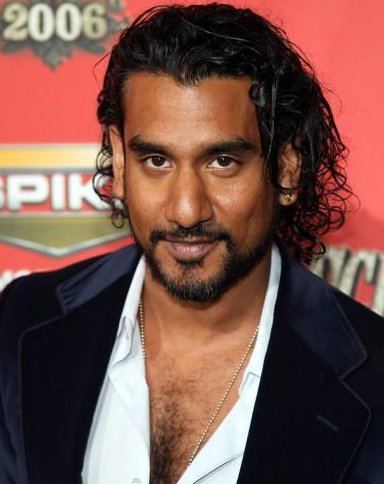
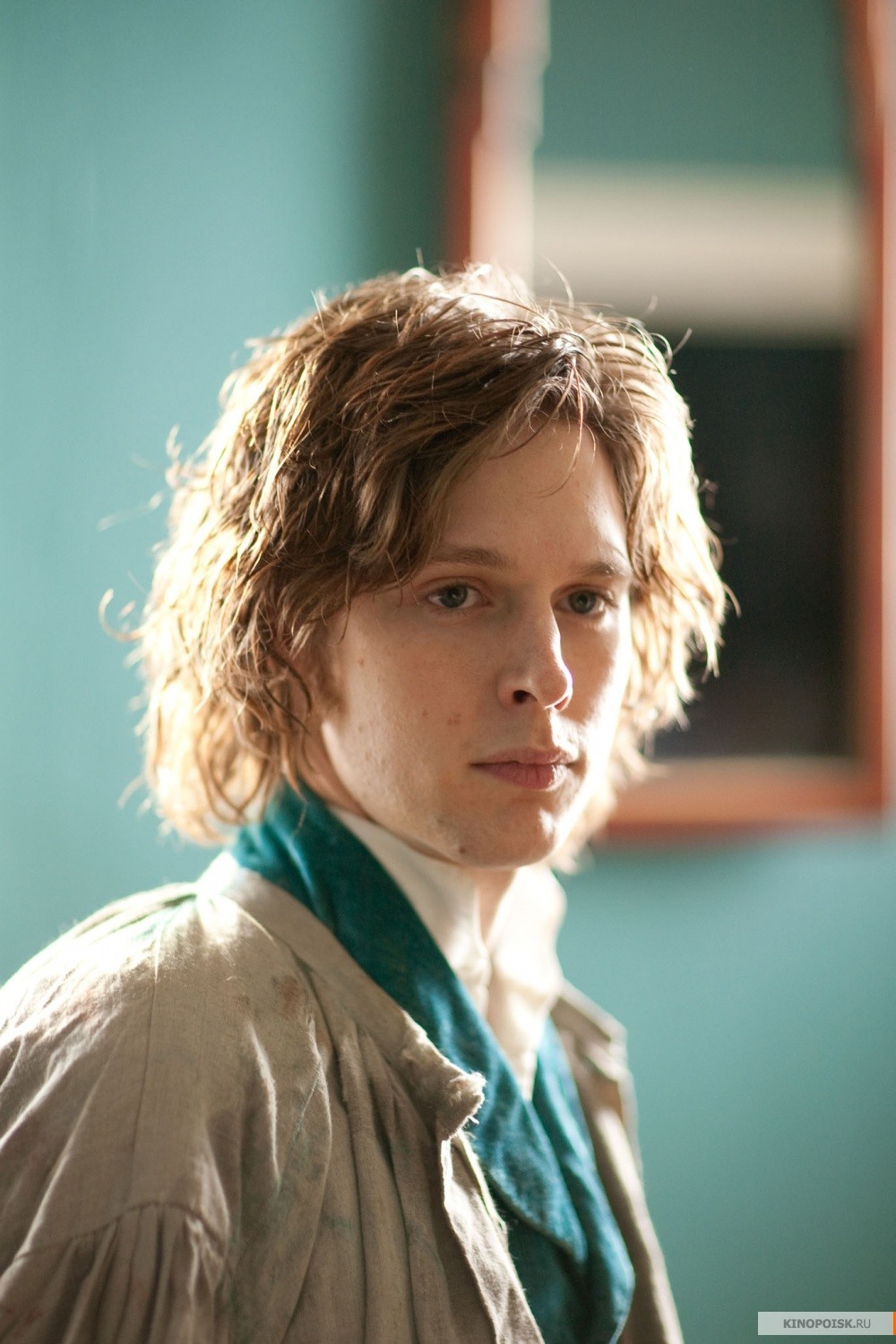
Yes, OK, I know, but there are so many vids I want to exist, and you have to admit, it would be pretty. It would be so pretty! And every season could be a different time period -- season one would be Elizabeth England, season two nineteenth-century California, season three early Hollywood (I'm eliding the season of pre-Columbian America because I wouldn't trust the producers not to screw it up) -- and everything would be gorgeous costumes and conscious anachromisms, and we could have Oona Chaplin (with red hair) as Mendoza, and Naveen Andrews as Joseph, and Samuel Barnett as Lewis, and Alfie Enoch as Nicholas/Edward/Alec, and yes, I know that in the books Nicholas/Alec/Edward is white but honestly given that the villains make it a huge point to make sure he grows up feeling different and isolated and like he has massive amounts to prove in every incarnation there is no actual reason on God's earth why he should be white, I'll fight you on this, the only really important factors are that he is British and extremely good-looking but also so tall as to look kind of uncomfortably distorted, all of which factors Alfie Enoch epitomizes, and maybe if Edward Alton Bell-Fairfax didn't literally epitomize the Victorian British white male patriarchy in every possible way I would feel less of an urge to punch him in the face at every opportunity! Who knows!

...anyway the most important thing about this hypothetical television show that I would conjure into existence is that it would VERY DEFINITELY tragically cancelled after the fourth season, with all the main mysteries unresolved! TOO BAD, HOW SAD, I guess fandom will just have to fill the gap and no one ever needs to remember the horrible Nicholas/Edward/Alec/Mendoza orgy of messianic incest EVER AGAIN.

So that's my confession. The 98% of you who have never read any Kage Baker books are now blinking at me in total incomprehension but 2% of you, 2% of you understand, right? (I'm still not rereading them though. Not yet. I'LL CAVE SOMEDAY but in the meantime I will stave off that day as long as possible with incoherent public rants.)

What about you guys, if you had the power to bring one television show into existence, what would it be?
skygiants: Hazel, from the cover of Breadcrumbs, about to venture into the Snow Queen's forest (into the woods)
So Kage Baker died in 2010, and in 2011 I found out that three posthumous novels of hers had been published, and I read two of them; as expected, one was mediocre, and one was the actual embodiment of everything that went wrong with the Company books.

And then I waited for a while, because I had one Kage Baker book left and I was full of hope about it and I was not prepared for that hope to be shattered.

But now I've finally read The Bird of the River, and it turns out that the last present Kage Baker left me is something I've never gotten from her before: a book of hers that I can wholeheartedly love and RECOMMEND TO PEOPLE, WITHOUT CAVEATS.

The Bird of the River is set in the same world as Kage Baker's other fantasy novels, The House of the Stag and The Anvil of the World, both of which I've read and ... are not books that I can talk about without huge caveats. Fortunately, The Bird of the River stands alone.

Eliss's mother is a deep-sea diver who's been down and out for a while due to a growing drug problem; Eliss is determined to get her a job, which is how Elissa, her mom, and her brother Alder end up on a barge traveling upriver to make sure that the waterways stay passable by clearing out snags that could wreck other boats.

More than anything else, the book is Eliss' coming of age story. There are two main threads, of which the first is Eliss' relationship with her ten-year-old younger brother. Alder is mixed-race, and because of that he comes in for a lot of negative attention. As Eliss starts to find her place, Alder is becoming more and more uncomfortable with his -- and even though Eliss feels like all they have is each other, Alder is starting to feel like that's not enough.

The other is thread is ... sort of the actual plot, although that doesn't mean it receives more attention than the other thread; plot is kind of secondary in this book. Anyway, it has to do with a dead body they find on the way, and increasingly frequent bandit attacks, and a young semi-hemi-demi-nobleman named Krelan who has signed on as a scullery assistant for ~mysterious purposes~. When Krelan sees that Eliss is extremely good at noticing things, he asks her for help. When Krelan first enters the book, he seems like he's going to fill the role of witty and dangerous upper-class love interest, and ... he sort of does, but the class stuff is significantly more complicated than that, and this is emphatically not a Cinderella story. (Also, Krelan and his terrible duck-moustache are adorable.)

The Bird of the River is not exactly a perfect book, and while I love Alder and Eliss' whole complicated and bittersweet relationship (SO MANY SIBLING FEELINGS!!!), its handling of race is not particularly revolutionary. All the same, this kind of quiet, low-key fantasy novel about the lives of ordinary people -- in which the stakes are not world or even country-shaking, and NO ONE IS SECRET ROYALTY, and we are expected to take the life of a diver on a river-barge as important, because it is -- is exactly the kind of thing I want to see more of, and so rarely do.

I'm so glad I saved this book. It's the best present Kage Baker could have left me.
skygiants: Na Yeo Kyeung from Capital Scandal punching Sun Woo Wan in the FACE (kdrama punch)
So technically I am an hour late on [personal profile] rymenhild's December meme request to fanwank Kage Baker's Company novels in such a way as to preserve the awesome and jettison the OMGWTFBBQ, but given that I went straight from work to a six-hour car ride to DC I hope I will be forgiven!

Okay, so the Company novels. What you need to understand about the Company books is that I discovered the first book, In the Garden of Iden, probably about a year after it was published in 1997. I was thirteen and fell head over heels for Mendoza, misanthropic teen cyborg botanist in Elizabeth England, and her doomed and tragic romance with a brilliant heretic, and her equally doomed and tragic semi-father-daughter-relationship with the cyborg who created her, and Kage Baker's dark and hilarious blend of incredibly well-researched historical fiction and deeply cynical science fiction dystopia populated with SO MANY SAD FASCINATING CYBORGS. I devoured each new book as it came out! I fell in love with every single side character introduced! I was more than happy to let Kage Baker spend forty pages describing a bunch of cyborgs MST3K-ing D.W. Griffith's Intolerance; that kind of thing was EXACTLY WHAT I WAS HERE FOR.

In fact, it is not an exaggeration to say that Kage Baker and her massive nerdouts about film history are a significant part of the reason why I am right now a moving image archivist. I referenced these books in my entrance essay to grad school -- and to be clear, this was after the last couple books came out; I was at that point under no illusions. But there is no way for me to shake how important the Company books are to me and how many feelings I am ALWAYS GOING TO HAVE ABOUT THEM.

But . . . the last couple books. Oh, the disappointing and quite frankly horrifying aspects of the last couple books. OH, MY OVERPOWERING DESIRE TO FEED EDWARD ALTON BELL-FAIRFAX, VICTORIAN DOUCHEBAG, TO THE CROCODILES.

So how would I fanwank fix the series? Well, I could write out a detailed and thoughtful treatment that took into account all the threads of the plot, but that would probably require me to reread the last book, which to be honest I have mostly blocked out of my mind except for everything involving Lewis and Princess Tiana Parakeet and immortal cyborg William Randolph Hearst. So right now, at 1 AM after a very long car ride, my diagnosis is pretty simple:

- MENDOZA FEEDS EDWARD ALTON BELL-FAIRFAX, VICTORIAN DOUCHEBAG, TO THE CROCODILES ROUND ABOUT THE MACHINE'S CHILD, AND EVERYTHING IS BETTER

(And then think of all the things a Mendoza liberated from the awful warping factor of Edward Alton Bell-Fairfax could do! She could go rekindle her friendship with Nan! She could plot revolution with Latif and Suleyman! She could sort out her relationship with Joseph! Hell, she could go hang out and shoot the breeze with Juan Bautista and his thirty pet birds and THAT WOULD MAKE FOR AN INFINITELY BETTER AND MORE REWARDING STORY than any plotline she had in the last two books.)
skygiants: Honey from Ouran with his hands to his HORRIFIED CHEEKS (ZOMG!)
December requested posts thing the second: five most cracktastic plot twists I have ever encountered, for [personal profile] rachelmanija. HOO BOY.

Okay, first of all, I am in no way guaranteeing that these are the actually the five most cracktastic plot twists I have ever encountered, because I'm sure as soon as this goes up five people will remind me of five more EVEN MORE CRACKTASTIC plot twists, to which I will say "I HAD COMPLETELY BLOCKED THAT OUT OF MY HEAD AND THANK YOU SO MUCH FOR REMINDING ME." This is just five reasonably cracktastic plot twists that I can come up with off the top of my head.

1. Since [personal profile] rymenhild has asked me to talk about the Company books later on this month, I may as well set the stage here for things to come: series-destroying spoilers, SERIOUSLY KAGE BAKER WTF )

2. I think Sheri Tepper only gets to be on here once and I honestly can't decide which was weirder, the time that evil undead university professors took the conjoined twins and separated them into screaming body parts in boxes before they turned into, respectively, an bird-person and an otter-person or the time that humanity's only hope was to join the civilization of sentient squids under the ocean so they could give birth to mer-babies. But honorable mentions certainly go to the time the magical Native American heroine turned out to be a sentient lizard-person who magically removed the sex drive from the human race (Gibbons' Decline and Fall) and the time Beauty from Beauty and the Beast was kidnapped by documentary filmmakers and taken to a dystopian future before learning that all horror writers automatically went straight to hell (Beauty).

3. Did anybody else ever read a set of kid's books about Finn mac Cool? One of them was called The Wizard Children of Finn and it was a fairly normal book in which a couple of kids go back in time and have adventures with Finn mac Cool and the preteen girl kind of crushes on him before discovering that he is her ancestor. Mildly awkward! Then there was a sequel whose name I cannot remember, in which the kids travel back in time again, get turned into birds, and discover that their mother also traveled in time, got turned into a deer, hooked up with Finn (who is also her ancestor) (after turning back from being a deer), and gave birth . . . to two babies . . . which Finn named after that cute girl he met one time and her younger brother . . . before mother and babies all fled forward into the future to allow for the cycle to repeat. SUCH AN INCREASE IN AWKWARD IN SUCH A SHORT SPAN OF TIME.

4. A lot of really weird things happened in Mawaru Penguindrum, but I can't talk about the weirdest and most horrifying because WE DON'T TALK ABOUT THE FROG. I will instead talk about the second-weirdest, which is the time it turns out spoilers...I guess? ) No, I'm lying, that isn't even anywhere near the weirdest plot twist.

5. I know, I know, we are all tired of hearing about the pig-dragon boyfriend of doom. AND YET I CAN'T NOT. To make up for it, please have some more cracktastic plot twists courtesy of a request from the last time I did a meme of this nature three years ago.

If anybody else feels inclined to try and top these examples from the top of my head, PLEASE DO.
skygiants: Princess Tutu, facing darkness with a green light in the distance (fakir you freak)
A PROS/CONS LIST

Pros of rereading Kage Baker's Company Books:

1. MENDOZA, best antisocial cyborg botanist lady protagonist ever
2. The centuries that Lewis spends earnestly writing fanfic
3. Joseph and Lewis: Wacky Cyborg Road Trip (Wacky Cyborgs Get Drunk On Chocolate! Wacky Cyborgs Visit Famous Literary Sites!)
4. Latif and his fine, fine self
5. Van Drouten and her fine, fine self
6. Nan and Kalugin, Cyborg OTP
7. My eternal desire to give Juan Bautista and Porfirio enormous hugs
8. The same for Victor, except if I did I would probably get the plague
9. Lolhistory!
10. Lolfilm history!
11. PRINCESS TIANA PARAKEET
12. Immortal cyborg William Randolph Hearst

Cons of rereading Kage Baker's Company Books:

1. Edward Alton Bell-Fairfax, WORST VICTORIAN EVER
2. That whole book where major spoilers )
3. That other whole book where even more major spoilers )
4. The fact that if I do this thing I can't even skip that last book, because PRINCESS TIANA PARAKEET
skygiants: Chauvelin from the Scarlet Pimpernel looking enormously cranky (pissyface)
Well, I spent so long accidentally ranting about Kage Baker in the comments of yesterday's post that I may as well continue that trend today!

So the thing is, my feelings about Kage Baker are very strong. I pretty much grew up with the Company series; I think I read In the Garden of Iden the year it came out, and jumped on each new book as it was published. The things I love about the series I love, in the way you love the books that are part of you, and many of the characters will always be among my favorite characters of all time. The WTF of the end (and it is an epic WTF) is not quite enough to change that - which is unfortunate, in a way, because it means that I can't just walk away from the books of hers I know won't make me happy. (I will inevitably reread them all, too. Even The Machine's Child, which is pretty much all just buildup to the half of Sons of Heaven that is awful.)

And then Kage Baker died, and I thought that was it, and then I found out that a.) three posthumous novels of hers had been published, which in a way was like she had come back to life and given me some presents, and b.) one of them was a prequel all about Edward Alton Bell-Fairfax, BIGGEST ASSHOLE IN THE SERIES, which in a way was like she had come back to life and given me some presents and one of them was a front-row ticket to a punch in the face.

But if someone goes to all the effort to come back to life and give you a present, it's hard to say 'no thank you, I've heard that venue delivers punches to the face.'

So: Not Less Than Gods and The Women of Nell Gwynne's )

I now have one Kage Baker book left - The Bird of the River, which appears to be about an awesome girl on a river barge, and which I suspect I will like much better than either of these. This is, of course, on purpose; I would like the last new book I read by Kage Baker to be something I can love rather than a punch in the face.
skygiants: Princess Tutu, facing darkness with a green light in the distance (mean to rule the earth)
Kage Baker's latest, The Empress of Mars, is basically a classic story of an Irish bar-owner struggling to make good, comfortably settle her three daughters, keep her colorful cast of clientele happy, and stick it to the man!

Of course, this is Kage Baker, which means there are a few twists, like:

- the whole thing takes place on Mars
- bar-owner Mary Griffith started out her career as a xenobotanist with the evil Martian settlement corporation before getting fired and stranded
- the colorful clientele include Nepal's leading journalist (making his name with exclusive Mars video dispatches), an Italian millionaire heir/romantic/diamond prospector/historical reenactor, a potentially possessed one-eyed ex-priestess who doubles as a short-order cook, an autistic genius who has single-handedly made Mars agriculturally viable with his mechanical bees, and Mars' very first casino owner, not to mention a secret cyborg or two
- the climax of a book is an epic tornado that hits as the entire bar is being pulled up a mountain by anti-gravity sleds.

Between the humor, the emphasis on making space settlement realistic and gritty, the frontier themes, and the "stick it to the man!" sentiment - not to mention the resident crazy girl in the kitchen - the feel of the book is almost Firefly-ish. It's hard for me to judge, but I would say it works pretty well as a standalone, despite being set in Kage Baker's Companyverse; there's only one character who's tied to the rest of the series at all, and he works decently in his own right. The weird thing, though, is that I imagine the story reads completely differently if you are familiar with Baker's other books, and if you aren't. If you aren't, it's basically about a plucky bunch of misfits who manage to successfully create a thriving settlement despite the evil corporation that wants to see them fail! If you are . . . I don't want to say anything spoily, but [livejournal.com profile] rymenhild, [livejournal.com profile] dictator_duck, you will know what I mean when I say the settlement in question is Mars Two.

Because it's Kage Baker, it's nearly a given (for me, at least) that the book will be fun to read - she's a very funny writer, and such a wonderful dork. (It's worth it for the scene where Fake Father Christmas appears and announces that since they are short of funds he is giving everyone ASTRAL PROJECTION PRESENTS alone.) And the characters of course are all a ton of fun. My biggest issue was the emotional balance of the book - I felt like the emotional center should have been the relationships between and among Mary and her three daughters, and that didn't really get the focus until towards the end, when it seemed like too little, too late. On the other hand, that may just be my biases speaking.
skygiants: Princess Tutu, facing darkness with a green light in the distance (land beyond dreams)
So I love Kage Baker a ridiculous amount and will read pretty much anything she writes. That doesn't mean I love everything she writes, or that she is the best author I know or that I would recommend her to everyone - most of her work has some pretty severe flaws, but the way she writes appeals to me so much that my overall love remains undiminished!

I was therefore extremely excited to find out that the NY Public Library had several books of hers that I had never read (some of them because they had not been published last time I checked, oh well). Last year I read a bunch of the short story collections; this year I have found a novella and a novel.

The novella, Or Else My Lady Keeps The Key, is a Caribbean-pirates-era adventure, and had some problems but was a lot of fun overall. )

The novel, The House of the Stag, did not work for me so much. Spoilery complaints! )

Aside from book specifics, though, Baker's fantasy does not tend to work as well for me overall as her books that are set in the real world. And I think this is because one of the things I love most about her writing is the places where you can see her overriding dorky obsessions with certain historical periods and people and places shining through the plot. Some people might count this as a writing flaw; personally, I think it's awesome. (I especially love when she interrupts the plot to get all geeky about California history, because it's really interesting!) So, even though Or Else My Lady Keeps The Key is not the best thing she's ever written, I know she's done her research and really just thinks the history is cool, and that gets me excited about it.

Which leads me to some questions for you all, to satisfy my ever-nosy curiosity: what are some dorky obsessions you can identify in your favorite authors? Do you think that's cool, or do you tend to eyeroll when it comes up in more than one book?
skygiants: Princess Tutu, facing darkness with a green light in the distance (land beyond dreams)
Some quick booklogging catchup today:

The King's Shield, the third book in the Inda series that I have been reading, I actually finished a while ago but have not got around to logging until now! Anyways, the series continues to be awesome. This installment was mostly centered around The Big War that's been building for the last two; now that all the characters are grown up there is also some ridiculous love polygon-age, but this does not frustrate me as it might because a.) it is so hilariously convoluted and multi-angled it really just entertains me, b.) it continues to take a back seat to politics and fighting and cultural norms, just as it ought, and c.) all the characters involved are allowed to be competent and sympathetic and non-villainized. So really if you're going to do a love polygon involving at least seven people (who at one point get a hilariously awkward dinner party scene together, too) then this is the way to do it! The other thing that very much impressed me about the book was the Tragically Noble Last Stand of an all-female group of castle defenders, just for the welcome proof that yes, it is possible to write female character death in a way that is awesome and non-exploitative and not All About The Men. I kind of want to print out that bit and wave it in people's faces when they fail to understand this.

I also almost-finished Sharon Shinn's Reader and Raelynx a while ago and then had to give it back to the library, so I only read the last twenty pages yesterday. Shinn is a total guilty pleasure for me; the Twelve Houses series has a pretty shaky mythology but interesting politics, and also I kind of enjoy the love stories even when they're ridiculous. Unfortunately, I was completely not won over by the love interest in this particular book, and I spent the whole time rooting for the protagonist to get together with her scowly and mysterious stepmother instead. However, I continue to be terribly amused by Shinn's occasional tendency to have grown-ups find a ridiculously easy solution to the main couple's problems while they're busy angsting, which was especially notable in this one when spoilers! )

Last but not least, I continue in my quest to read everything Kage Baker ever wrote with her short-story-and-novella collection, Dark Mondays. I was not blown away by any of the stories in this collection (though I expect the Lovecraft fans on my flist would really enjoy the one about Great Ones rising from a fast-food restaurant), but I really enjoyed the novella, The Maid on the Shore, which was all about Henry Morgan and an awesomely bizarre Motley Crew of pirates including a berserker Protestant reverend and his 'cousins' 'Bob' and 'Dick' (HAHAHAHA), a pair of badass trappers who are also gay lovers, and a terribly sarcastic English lord involved in a conspiracy involving boots. What is not to love?
skygiants: Princess Tutu, facing darkness with a green light in the distance (land beyond dreams)
Someday I will be caught up on booklogging! Today . . . is probably not that day, but oh well.

I read Elizabeth Knox's Dreamhunter a little while ago, and found it interesting but frustrating. The sequel, Dreamquake, was equally interesting and much less frustrating! Questions get answered, relationships are portrayed with wonderful complexity, there are several brilliantly well-written and chilling sections (much of the strength of the books as a pair come from Elizabeth Knox's ability to convey genuine terror in each novel's climactic scene, the opera house and the debutantes' ball) and all of the characters grow and develop, and you guys know I love that. I do, however, think that the author slightly copped out on the ending and did not really explore all the implications of a development that is FULL of Implications, but I will leave it at that because spoilers, and I don't want to spoil because, despite that, with the completion of the pair I can now say that I really do recommend the books.

On the subject of continuing fictional universes, I read Kage Baker's Mother Aegypt and Other Stories because it contained one of the very last few stories in the Company universe that I had not read. That would be the title novella, and it did not in the least disappoint, dealing with, among other things, the suicidal immortal Amaunet, deals with the devil, and evil chickens of doom done right. As for the rest of the stories, the first four didn't grab me, and I was beginning to be disappointed when I got to "What The Tyger Told Her," a thoroughly creepy and wonderful story about a little girl observing the twisted family dynamics on her grandfather's estate. After that, there were a whole slew of stories that I really liked. Special fondness went to "Nightmare Mountain", which filled me with joy as a one-time Californian for intertwining the story of Cupid and Psyche with the legend of the Winchester House; "Pueblo, Colorado Has The Answer", which does the kind of mix of thoroughly ordinary people and thoroughly extraordinary happenings that I love best; and "Her Father's Eyes," which I had to read twice to figure out what was going on (and then felt extraordinarily dim for not getting it), but which is also one of the best little-girl-with-the-Sight stories I have ever read. I'm not a big short story reader on the whole - they don't tend to satisfy me the way novels do - but when Kage Baker is on, I enjoy her stories in a way that I usually don't with others.

Because I'm curious: how do you guys feel about short stories? Love them 'cause they're short, hate them for the same reason, think they're well used but only by some?
skygiants: Princess Tutu, facing darkness with a green light in the distance (land beyond dreams)
So I posted a poll a while back.

Now, those of you who thought that I was going to be way too lazy to booklog on this journal are without a doubt the wisest among you. Nonetheless, it is now the new year, and since no one let out an outcry of 'o spare my flist, please' I am going to try my hand at this thing and see how long I go before I run out of steam and/or time.

Conveniently enough, the first two books I have read this year - The Machine's Child and The Sons of Heaven, by Kage Baker - are the last two books of a series I already babbled about at length, back when The Machine's Child came out a little more than a year ago. Therefore, I will ease myself into the booklogging, keep my remarks to a minimum, and simply repeat: everyone should read these books. No, seriously, everyone. They are not without flaws - overall the first four are stronger than the second four, but then again, the first four set a remarkably high standard - and I will say in a generally unspoilery way that I am not so sure about the plot device that the author uses to reach her desired conclusion in The Sons of Heaven, but much of the conclusion made me ridiculously gleeful anyways.

. . . also, there is a character who names herself Princess Tiara Parakeet, and another character who at a crucial moment references Discworld, and nineteen-volume Victorian monographs on the care and feeding of the cyborg child, and immortal cyborg William Randolph Hearst kicking ass and taking names. YOU CANNOT DENY THE AWESOME.

Profile

skygiants: Princess Tutu, facing darkness with a green light in the distance (Default)
skygiants

July 2026

S M T W T F S
   1 234
567891011
121314 151617 18
19202122232425
262728293031 

Syndicate

RSS Atom

Most Popular Tags

Style Credit

Expand Cut Tags

No cut tags
Page generated Jul. 25th, 2026 10:02 am
Powered by Dreamwidth Studios