(no subject)
Nov. 10th, 2018 03:52 pm![[personal profile]](https://www.dreamwidth.org/img/silk/identity/user.png) skygiants
skygiantsSometimes I read a book and wish I was back in an English Lit class so that I could have a formalized way to unpack my thoughts and put them in context with the thoughts of other people. I'm feeling that way about Lud-in-the-Mist, which I did not expect, as my prevailing impression of it before reading it was 'light rural British fantasy that inspired Stardust and other works in that vein.'
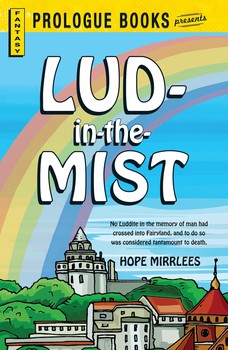
The significant misapprehension here was 'light'. Despite the horrible jaunty yellow cover of my library copy, Lud-in-the-Mist is not a light book. It's about death, and depression, and the fictions that make life bearable.
... and Fairy, which at one point or another in the text stands in for all of those things!
Lud-in-the-Mist centers on Nathaniel Chanticleer, mayor of Lud, capital of Dorimare, which neighbors on Fairy -- but Fairy has been locked out for several centuries, and the profoundly prosaic modern Ludites treat everything to do with it as an obscenity. Unfortunately for the modern Ludites, someone has been smuggling fairy fruit into Lud. Unfortunately for Nathaniel Chanticleer, his son Ranulph -- already kind of a weird kid -- has apparently eaten some of the fruit.
...so does his daughter, eventually, but Nathanial absolutely does not care so much about that. (I cared, and bristled for all the many, many pages during which the narrative gave an enormous shrug about the young ladies of Lud.) On the other hand, the only reason Nathaniel cares about Ranulph is due to a moment towards the start of the book, when he recognizes his own habitual melancholy in his son and for the absolute first time becomes EXTREMELY INVESTED. The pattern for a good father, Nathaniel Chanticleer is not. He's a masterfully-drawn character, though, a bundle of depression and unease and yearning/fear after something unknown wrapped up in the hearty bluff outside of a small-town bourgeois -- not a hero I expected, or that anyone expects in-text either.
In the end, the borders between Fairy and Lud have to come down, and do -- but it's a strange conclusion, because it's not like Fairy makes a single person in this book happy, or brings any kind of joy. To me, the conclusion seems to come as a kind of profound, sad inevitability: Fairy's a weird, wild misery, but it's better to acknowledge it than to lock it away, and replace it with another set of fictions.
I do find it interesting that of all the things that have been taken from Lud-in-the-Mist over the years and put into other books, the thing that doesn't seem to come along with it particularly is the explicit link between the land of Fairy and the land of the dead.
(I guess you could make a case that it does in Jonathan Strange and Mr. Norrell, but it comes across quite differently there than the deep discomfort of Lud-in-the-Mist -- JSMN takes away the hope of peace for those who dwell too deeply in magic, but Lud-in-the-Mist won't promise peace for anyone at all.
The significant misapprehension here was 'light'. Despite the horrible jaunty yellow cover of my library copy, Lud-in-the-Mist is not a light book. It's about death, and depression, and the fictions that make life bearable.
... and Fairy, which at one point or another in the text stands in for all of those things!
Lud-in-the-Mist centers on Nathaniel Chanticleer, mayor of Lud, capital of Dorimare, which neighbors on Fairy -- but Fairy has been locked out for several centuries, and the profoundly prosaic modern Ludites treat everything to do with it as an obscenity. Unfortunately for the modern Ludites, someone has been smuggling fairy fruit into Lud. Unfortunately for Nathaniel Chanticleer, his son Ranulph -- already kind of a weird kid -- has apparently eaten some of the fruit.
...so does his daughter, eventually, but Nathanial absolutely does not care so much about that. (I cared, and bristled for all the many, many pages during which the narrative gave an enormous shrug about the young ladies of Lud.) On the other hand, the only reason Nathaniel cares about Ranulph is due to a moment towards the start of the book, when he recognizes his own habitual melancholy in his son and for the absolute first time becomes EXTREMELY INVESTED. The pattern for a good father, Nathaniel Chanticleer is not. He's a masterfully-drawn character, though, a bundle of depression and unease and yearning/fear after something unknown wrapped up in the hearty bluff outside of a small-town bourgeois -- not a hero I expected, or that anyone expects in-text either.
In the end, the borders between Fairy and Lud have to come down, and do -- but it's a strange conclusion, because it's not like Fairy makes a single person in this book happy, or brings any kind of joy. To me, the conclusion seems to come as a kind of profound, sad inevitability: Fairy's a weird, wild misery, but it's better to acknowledge it than to lock it away, and replace it with another set of fictions.
I do find it interesting that of all the things that have been taken from Lud-in-the-Mist over the years and put into other books, the thing that doesn't seem to come along with it particularly is the explicit link between the land of Fairy and the land of the dead.
(I guess you could make a case that it does in Jonathan Strange and Mr. Norrell, but it comes across quite differently there than the deep discomfort of Lud-in-the-Mist -- JSMN takes away the hope of peace for those who dwell too deeply in magic, but Lud-in-the-Mist won't promise peace for anyone at all.